Section 4: Planning for action
Lesson four: creating Growth Action Plans (GAPs)
Part of How to debrief 360 results and drive meaningful change, a six-section guide. Back to the overview
"If you fail to plan, you are planning to fail."
Benjamin Franklin

Creating Growth Action Plans (GAPs)
Creating a GAP is one of the most important parts of the 360 feedback process. It ends in a detailed, targeted plan designed to build capabilities that are critical to the participant's success and to the business. Emphasis should be on sound analysis rather than administrative procedure, but it is important for participants to document their GAP.
As a manager or coach, being actively involved in helping participants with their plan is critical to continuous improvement. Many tips from the previous section apply here too, such as setting the context and climate and making sure the meeting is participative.
If your participant's organization has enabled the Perceptyx Grow product, there are additional features participants will experience as they take the next steps to develop their capabilities.
Action planning with AI-assisted action planning
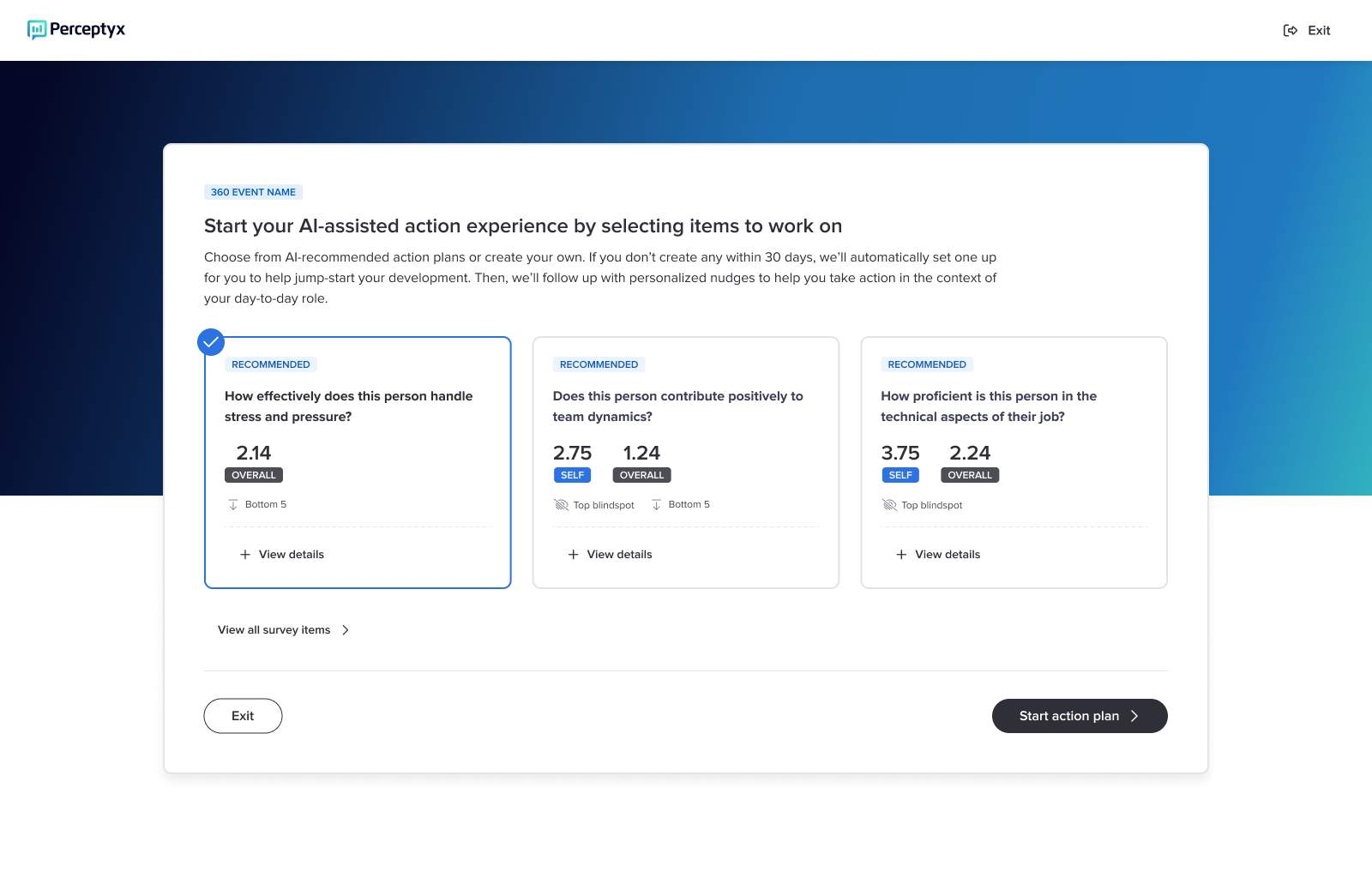
As the participant builds their action plans, AI-assisted action planning suggests the top areas with the greatest potential impact based on real-time data and insights from the listening event. The participant selects the areas they plan to focus on from the AI-powered recommendations and starts building.
Driving change with intelligent nudges
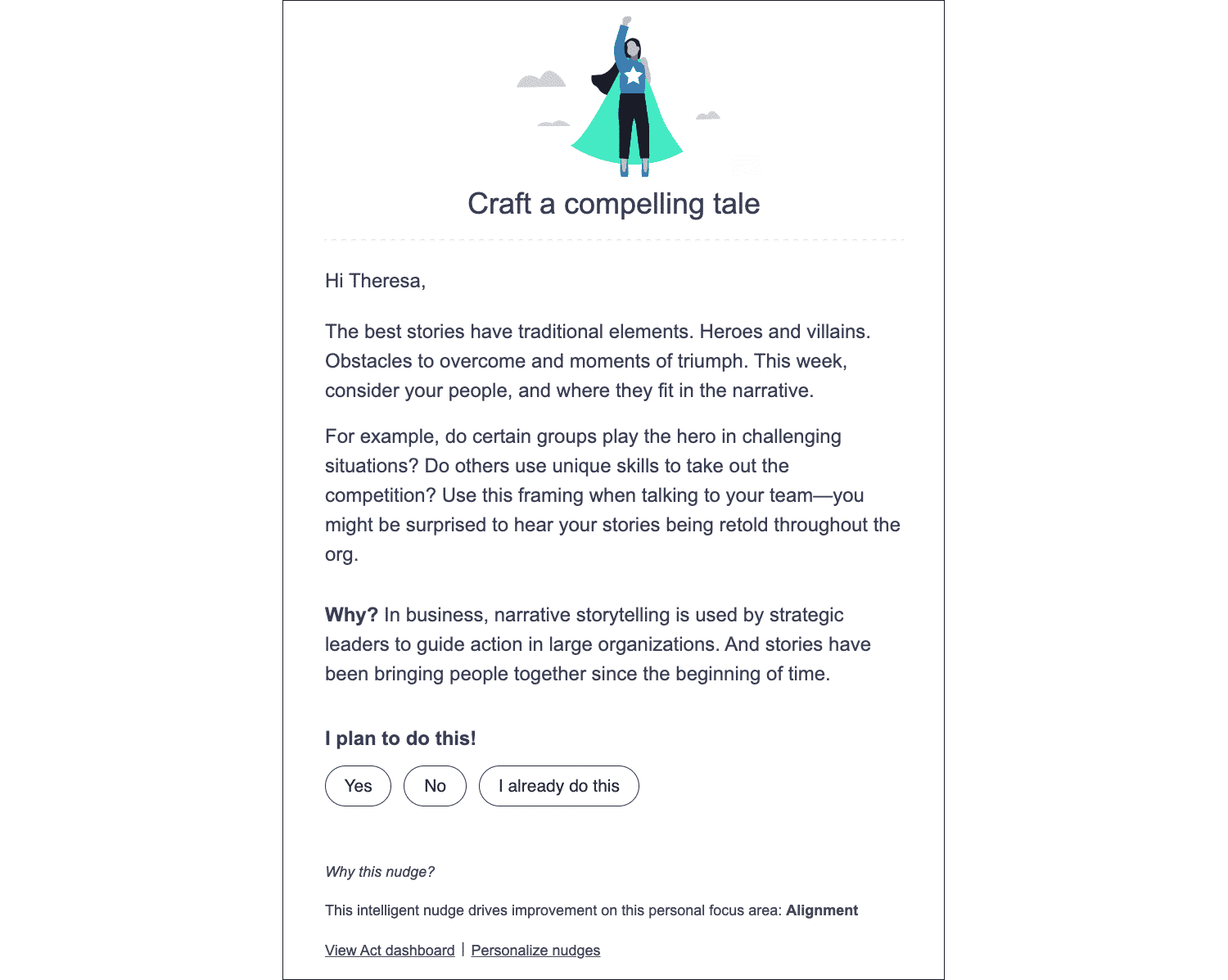
Once the participant has completed their action plans, the AI engine delivers intelligent nudges: science-backed, bite-sized, personalized recommendations in the flow of work aimed at inspiring behavior change. Participants can access these recommendations in the flow of work, for example in the platform, by email, or in Slack, and commit to putting the suggestion into practice day to day.
Personalizing the experience
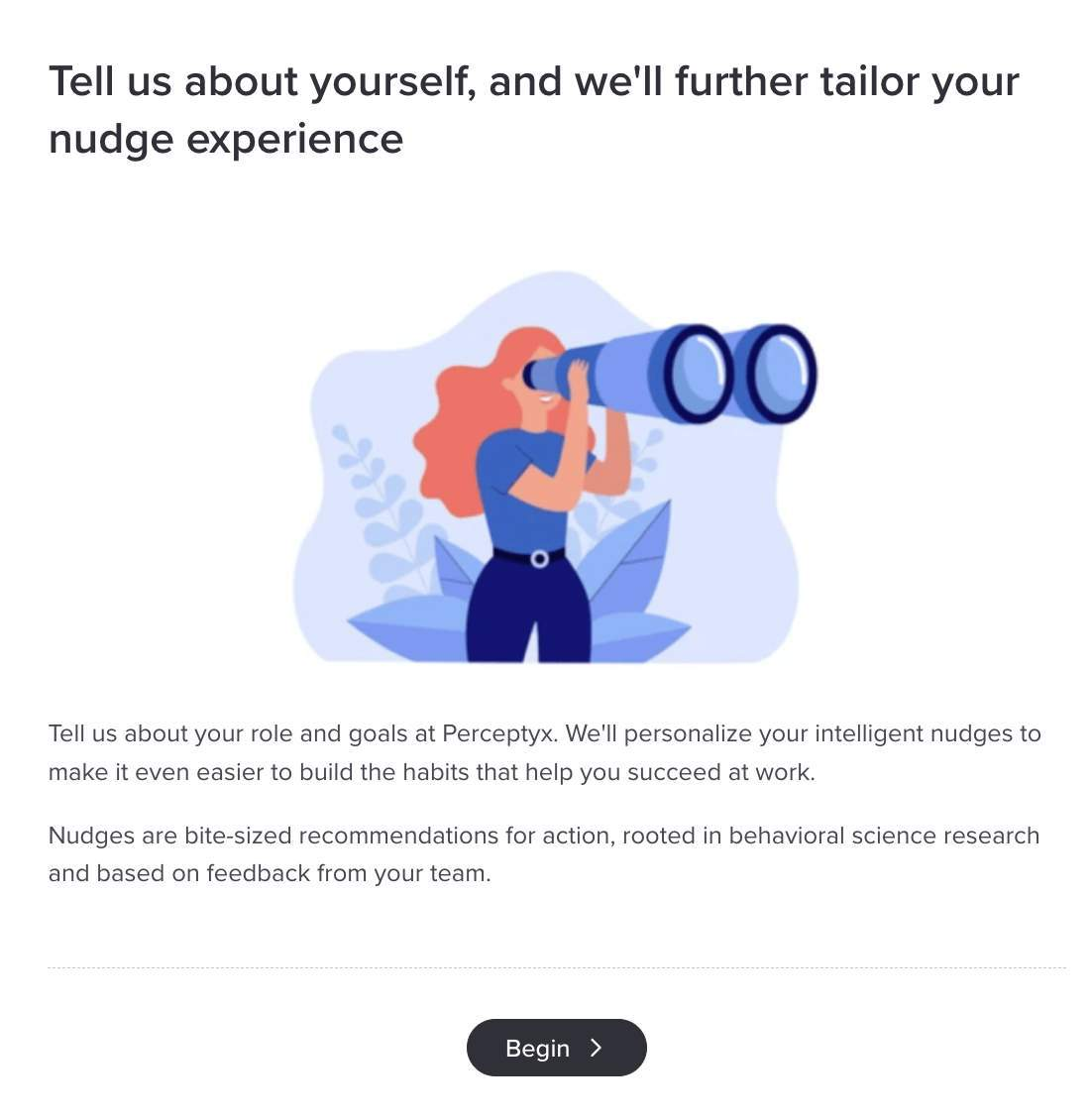
Participants can interact with and personalize their intelligent nudges so the recommendations keep evolving. They can indicate their intended action, for example yes, no, or I already do this, and add context such as their role.
Selecting development areas
Some best practices for guiding participants as they choose development areas:
- Remember that your role is to provide guidance. Let participants make the final decision on what areas to focus on, then help them stay accountable for their action plan.
- Have a general conversation about career goals before identifying specific development options, if you have not already done this in the initial debrief. How does the participant define career success, and what are the short and long term goals that would help them get there? This can set the stage for a more targeted GAP.
- Ask participants what surprises them most in their feedback. Also ask what met their expectations, what concerns them most, and how the feedback connects with what they are already doing. Ask them to reflect on other sources of feedback they have received. All of this helps them think about what to focus on.
- As a manager or coach, it can help to outline some of the organization's, department's, or team's objectives and talk about how the participant's development choices align with them.
- There may be several capabilities worth developing, but selecting too many at once will hurt the participant's ability to accomplish their development goals. Help them focus on just a few areas at a time, ideally one strength and one growth opportunity.
Selecting development actions
Help participants identify development resources inside and outside the organization: seminars and training, conferences, articles, and books that could improve their knowledge and insight.
Those resources are useful, but think creatively about on-the-job activities as well. Research shows that 70 percent of development happens through on-the-job activities.
The best opportunities for growth happen as new challenges are handled on the job. That does not happen by accident though. Some people stay in the same job for years without gaining much from the experience. Help participants think creatively about how their current role can be used to build skills, and use your own experience and creativity to guide action planning.
If you are the participant's manager, you can also help by:
- Increasing the amount of feedback and coaching you provide
- Providing new and challenging assignments
- Delegating specific tasks to increase their level of competence
- Encouraging participation in task forces or special projects
- Offering cross-training opportunities in another department or function
- Working closely with direct reports in areas important for development
Putting the GAP together
Encourage participants to document their action plans in the Perceptyx Platform. This significantly increases the likelihood of follow-through and action. Here is how it works.
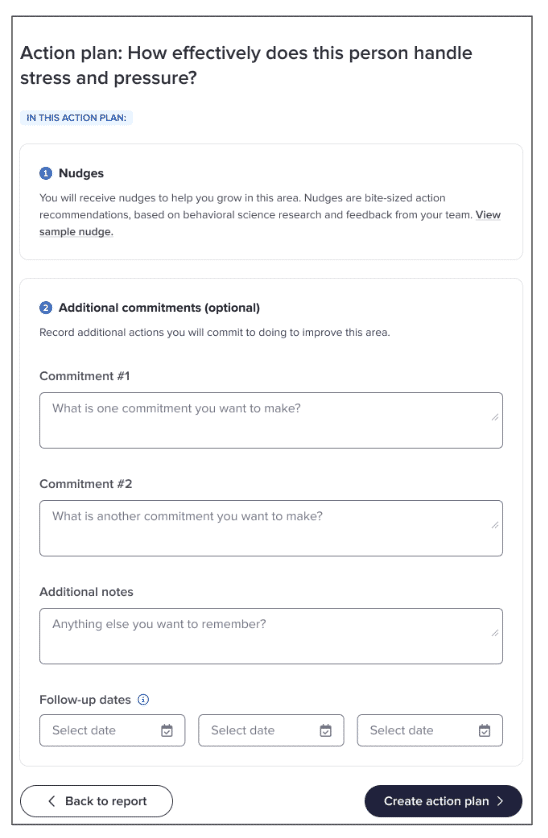
Action planning in three steps
- Click the recommendations you want to act on.
- Enter two commitments you want to make. We recommend choosing a quick win for the first action. Add any additional notes.
- Enter three dates for follow-up.
GOOD TO KNOW
The Perceptyx Platform will send the participant reminders to track their progress against the dates they selected.
Next: Section 5 covers how to run feedback discussions when reports are confidential.
Was this article helpful?
That’s Great!
Thank you for your feedback
Sorry! We couldn't be helpful
Thank you for your feedback
Feedback sent
We appreciate your effort and will try to fix the article