Analyze
How to find and open the results for your listening events, whether you build events yourself or someone has shared reports with you.
Before you start
Once a listening event closes, its results are ready to view. You don't always have to wait that long, though. While an event is still live, you can check in on results as they come in, as long as enough people have responded to meet the event's minimum response threshold. That threshold keeps small groups from being identified, so results stay hidden until it's met.
There are two ways to get to your results: the Analyze page, which lists every report you have access to, and the Home page, which shows your most recent ones. Which reports you see, and what's inside them, depends on the access your organization has given you.
Note
For security, your reporting session times out after 30 minutes of inactivity. If that happens, just log in again to pick up where you left off.
This article walks through
Access results from the Analyze page
The Analyze page is home base for all of your reporting. It has two sections: Recent, for quick access to what you've looked at or received lately, and All Reports, a full list you can search and filter.
The Recent section
Recent shows a card for each of your latest reports. Use the tabs across the top to narrow things down by type, like Point-In-Time, Lifecycle, Crowdsource, or 360 feedback. The Most recent tab shows everything together, newest first.
Each card tells you the event name, the role you'll view it as, its type and status, and a key date. Listening event cards also show the response rate so far. If there are more cards than fit on the screen, use the arrows below them to scroll.
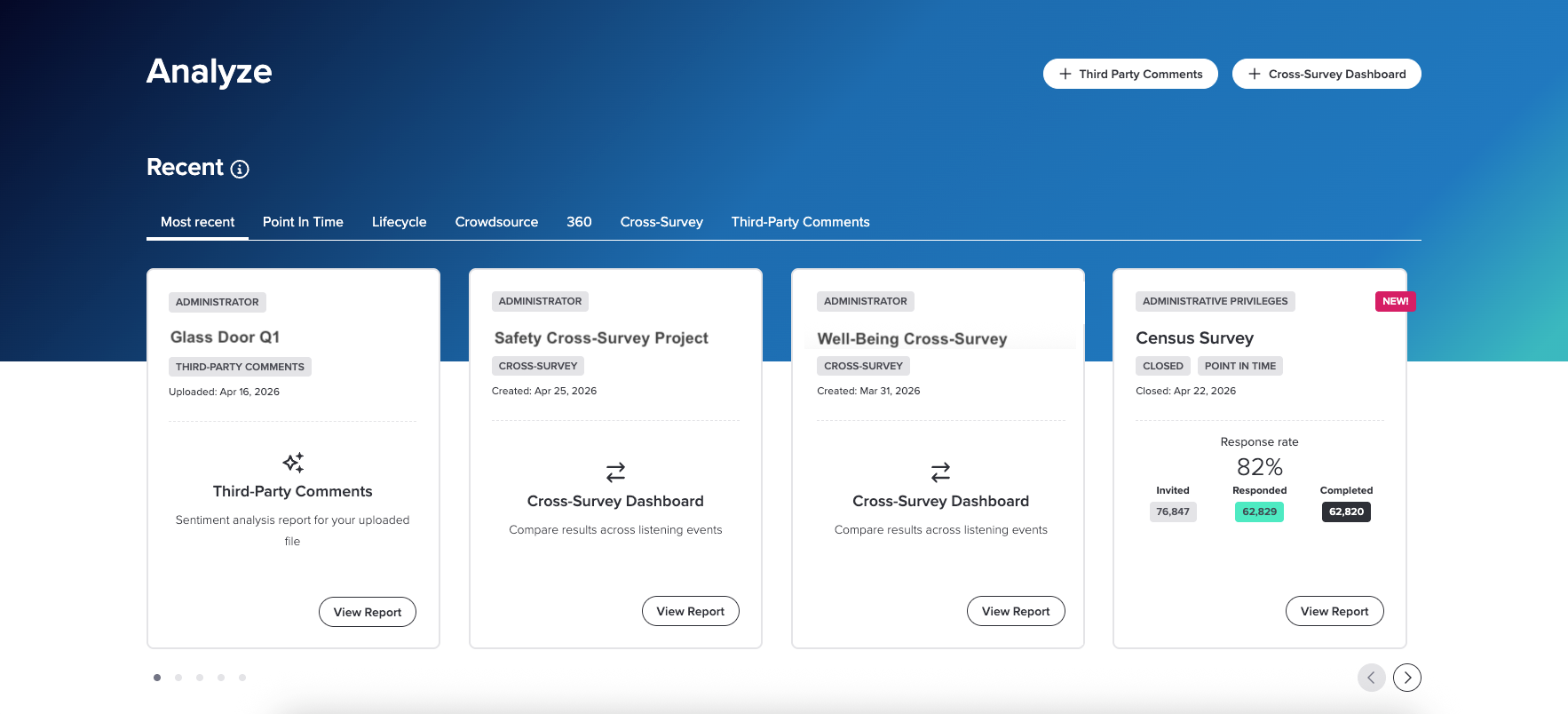
Depending on your access, you might also see cards for cross-survey dashboards and Third-Party Comments files here, plus buttons at the top of the page to create new ones.
The All Reports section
All Reports lists every report you can view. It's the place to go when you're looking for an older event or have a lot of reports to sort through.
- Search for a report by name.
- Filter by type, talent priority, launch date, or close date, then click Apply filters.
- Use the All Reports, Live, and Closed tabs to see reports by status.
- Click a column heading's arrows to sort.
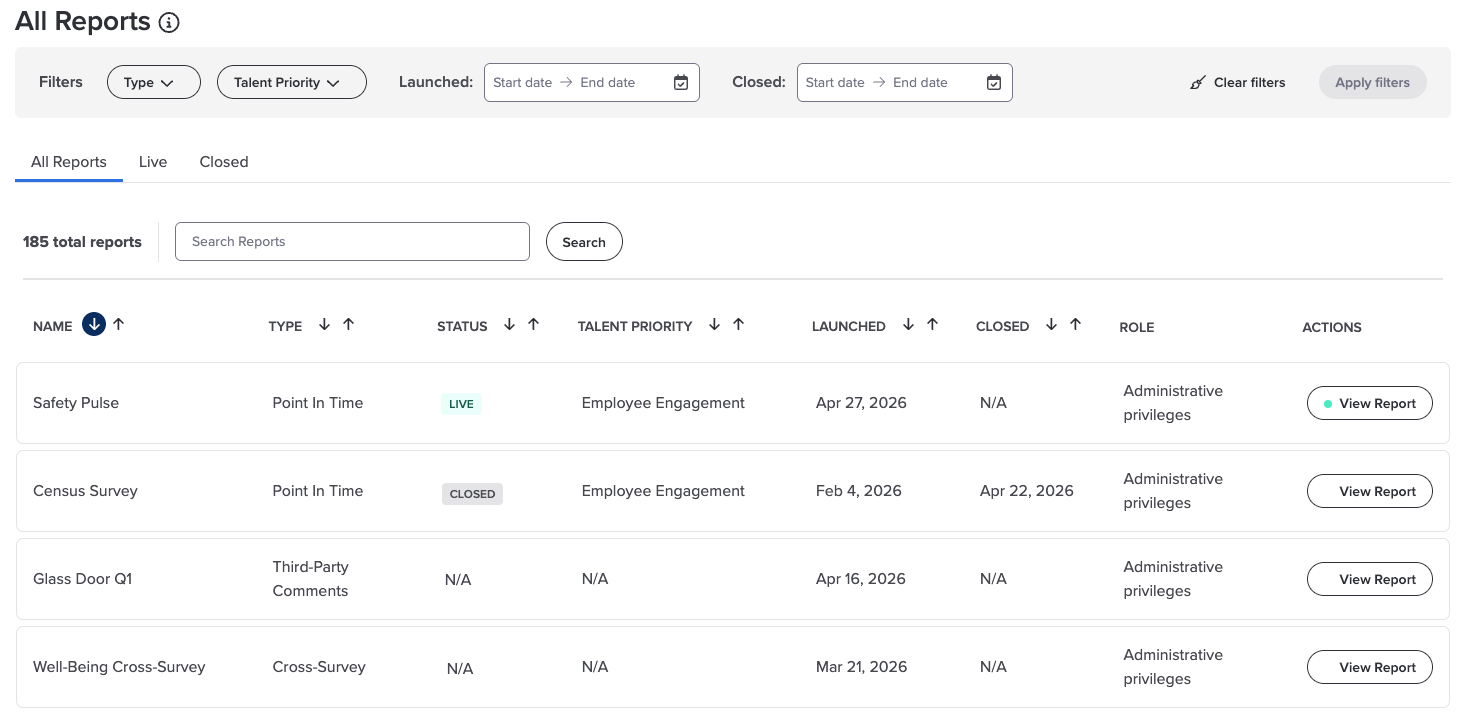
The Role column shows which role you'll see each report as.
Open a report
- Log in to the Perceptyx platform.
- In the top navigation bar, click Analyze.
- Find your event in the Recent section, or search for it in All Reports.
- Click View Report. Point-In-Time and Lifecycle results open in Advanced Reporting.
Tip
A green dot on the View Report button means the event is still live, so you're looking at results as they come in. They'll keep updating until the event closes.
Access results from the Home page
The Home page gives you a shortcut to your newest results. What you see there depends on whether you build listening events or receive reports for them.
If you build and manage listening events
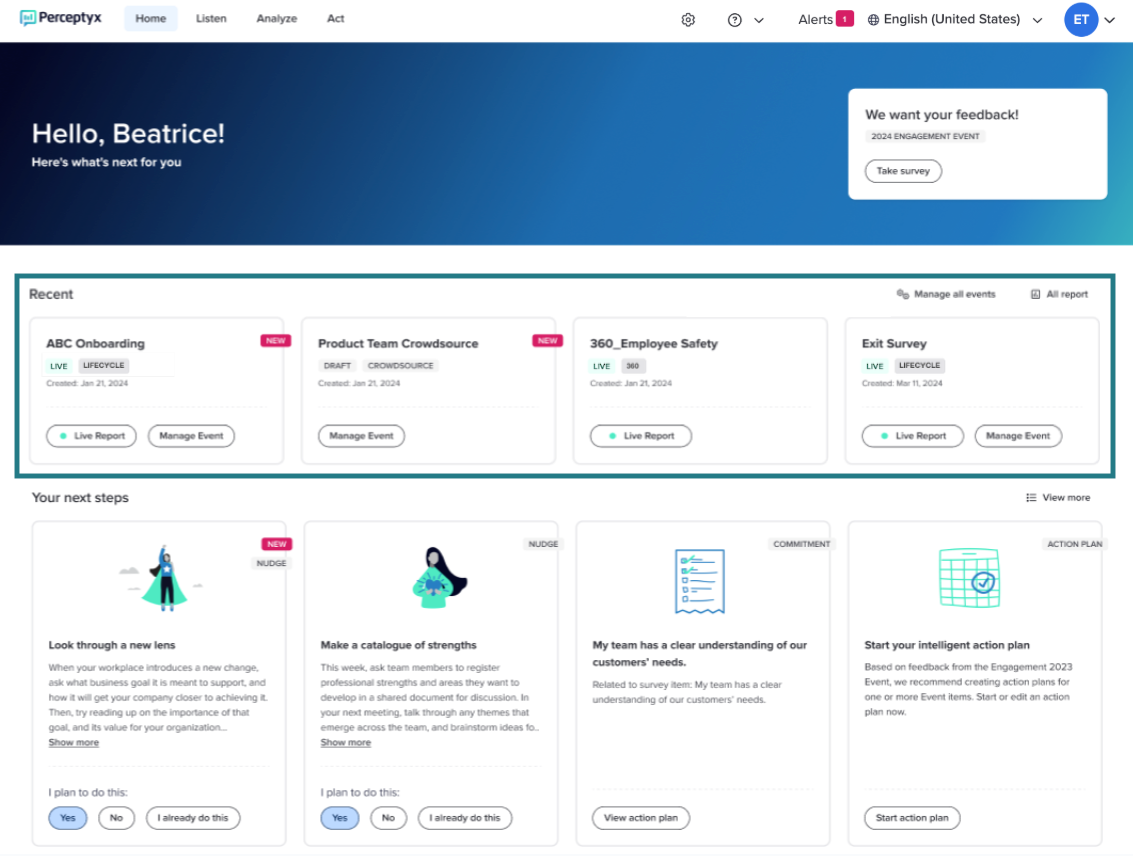
The Recent area shows up to four of your most recently updated events. Live and closed events have a button to open their results: Live Report while the event is running, and View Report once it's closed. You'll also find Manage Event for jumping back into the event itself, and links to all your events on the Listen page and all your reports on the Analyze page.
If you receive reports
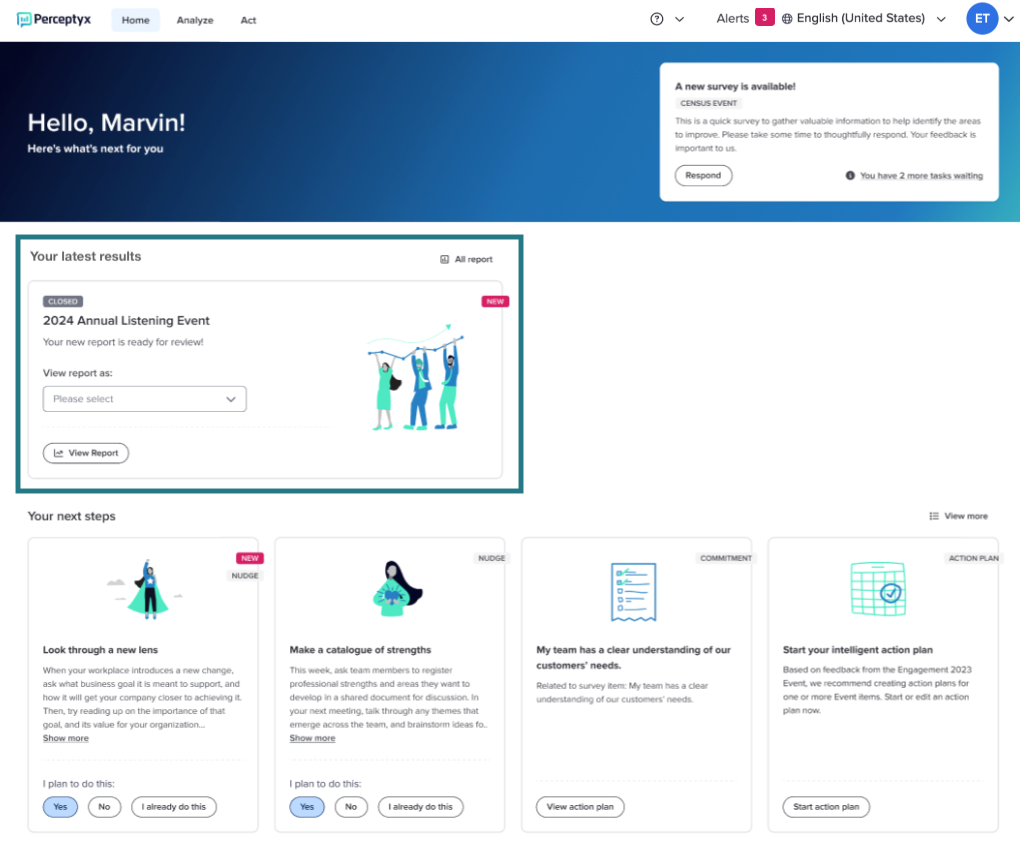
The Your latest results area shows the most recent closed event you have access to. If you have more than one role for that event, choose the one you want from the View report as dropdown first. There's also a link to see all of your reports on the Analyze page.
Open a report
- Log in to the Perceptyx platform. You'll land on the Home page. If you're somewhere else, click Home in the top navigation bar.
- If you see a View report as dropdown, pick the role you want to view the results as.
- Click View Report, or Live Report for an event that's still running.
What's next
Got your report open? Filter Your Data shows you how to narrow your results down to a specific group, like one region or team.
Was this article helpful?
That’s Great!
Thank you for your feedback
Sorry! We couldn't be helpful
Thank you for your feedback
Feedback sent
We appreciate your effort and will try to fix the article